Bank deposit
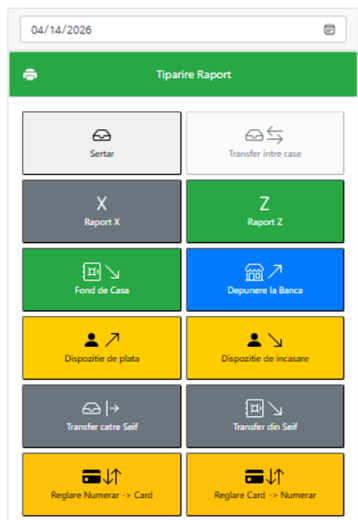
When depositing with the bank, the procedure involves printing two receipts: the first is the tax receipt for taking the amount out of the drawer (mandatory from a fiscal point of view), the second prints the comment with the details of the operation — the amount, the destination, the person responsible.
This separation into two receipts is necessary because the tax office does not allow the printing of free texts on the receipt for removing amounts from the drawer.
The system automatically checks whether the requested amount is available in the drawer. If not, the operation is blocked — you can't remove more than there is physically.
House fund
At the opening of the working day, each house receives an initial fund — the amount of cash needed to give change to the first customers. The transfer from the safe to the checkout is automatically documented.
Payment/collection provision
Any movement of cash that is not a sale — payment to a supplier, collection of an amount from a partner — is made by disposition, documented on the tax office.
Safe transfer
The cash accumulated in the drawer is periodically transferred to the store vault, reducing the risk of theft and keeping the drawer at an operational level. The reverse transfer (from the safe to the cashier) is made when the cash flow falls below the minimum.
Card Adjustment — Cash
Correcting the situation where a transaction was recorded on an incorrect payment method — for example, a card payment recorded as cash or vice versa.