Pricing Types
Datagate handles several types of pricing, each with a specific role:
Current Price — the price at which the product is currently being sold, per store. This is the price displayed on the label and collected at the checkout.
Current price promotion — a reduced current price, set in the case of successive discounts at the end of the season. The goal is to prevent the application of other discounts (loyalty card, voucher) over an already significant discount, avoiding selling below the cost price.
RRP / Season Price — the manufacturer's recommended price or seasonal price, per item. It serves as a reference for calculating the discount displayed to the customer: "from 200 lei, now 140 lei".
Price in the last 30 days — the lowest price charged in the last 30 calendar days. Required under EU law for the correct display of discounts.
Discounts
The system supports several types of discounts, each with its own rules:
Discount at the checkout — automatically applied from the current price, without the intervention of the cashier. Centrally configured.
Manual discount — the seller applies an additional discount to the current price. It can be applied before or after the automatic discount (configurable). Requires mandatory justification — e.g. "minor defect" or "approved by phone by area manager".
Loyalty card discount — automatically applied if the customer is identified and has an active card.
Volume discount — quantity promotions:
- 1+1 free — the value of the second product is distributed as a discount on both
- 1+1 at 50% — the 50% discount remains on the second product, provided that it does not go below cost
- Extended combinations: 2+1, 3+2, etc.
- Applicable once (on the lowest priced item) or multiple times
Wave discount — especially applicable in the supermarket, where prices change depending on the quantity.
Payment method discount — automatic discount for certain payment methods (e.g. 3% discount on payment with ING card).
Cumulation — the settings configure which discounts are cumulative and which are not.
Pricing Management
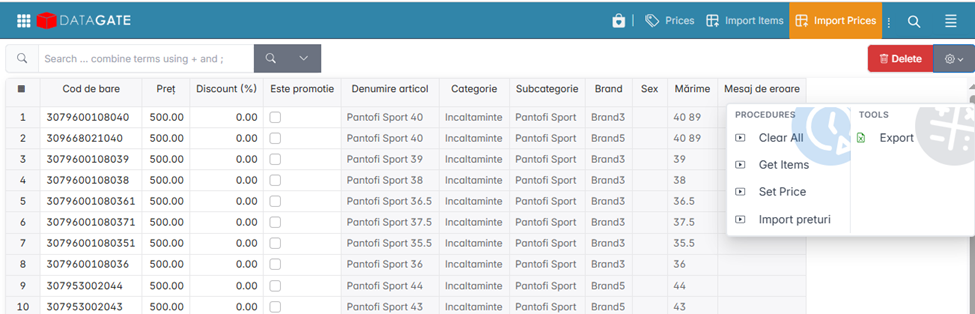
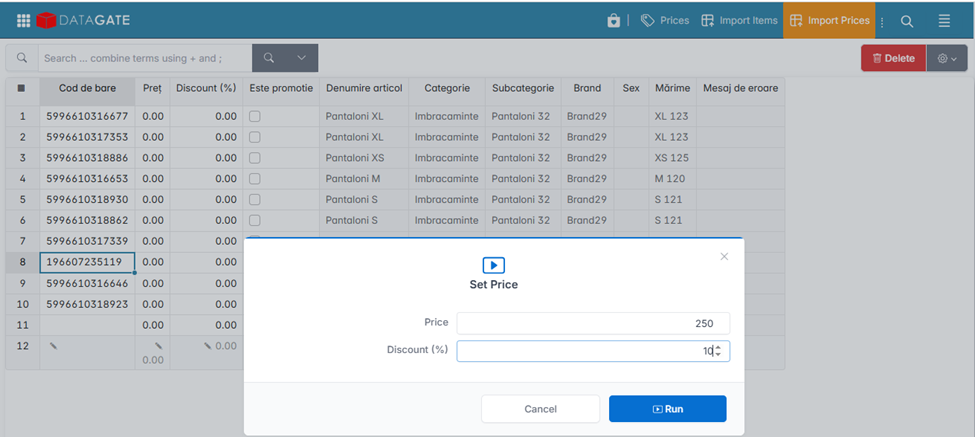
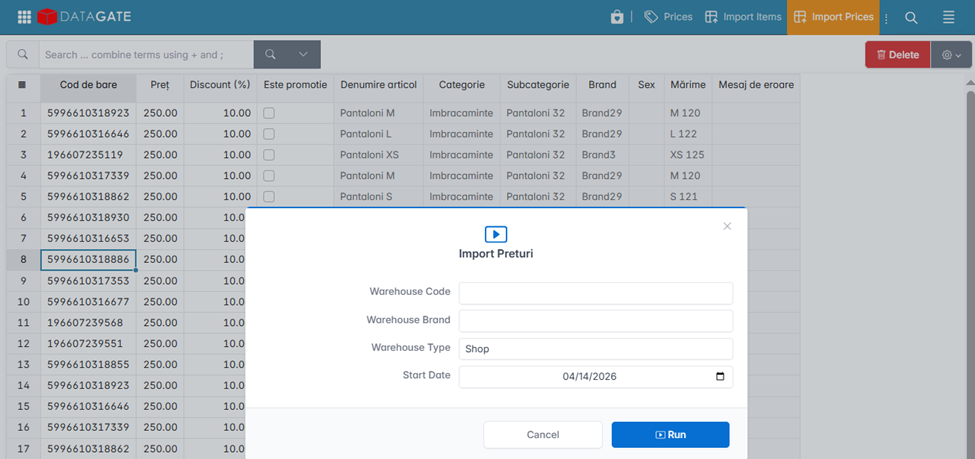
Import and setting — prices and discounts can be set manually or imported, with a scheduled application date.
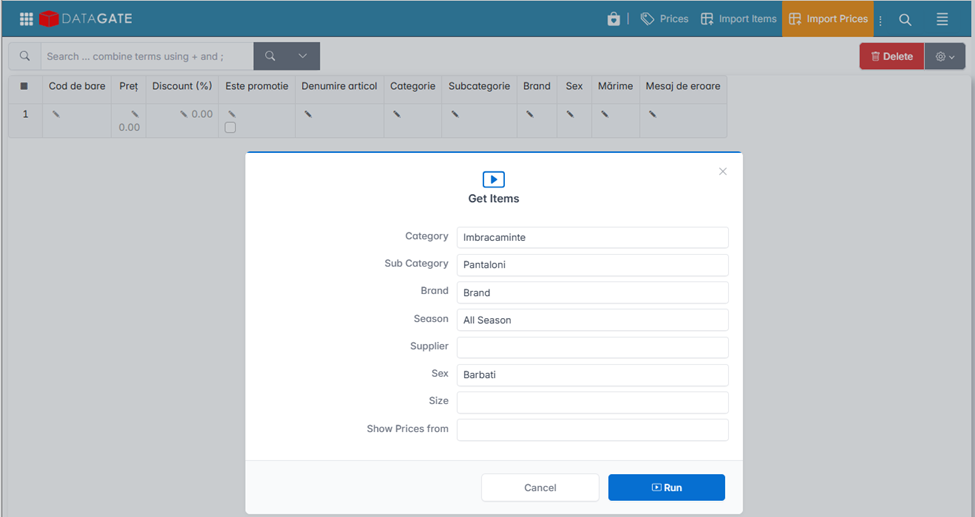
Filtering — items can be filtered on various criteria (brand, category, season) for selective price application.
Application by location — prices apply by concept, individual stores or warehouse type.
Work in parallel — multiple users can work simultaneously, each on a different product range or on other stores, without blocking each other.
Automatic application — scheduled price changes are automatically applied overnight without manual intervention.
High volumes — For campaigns with more than 30,000 items, the import runs in the background without blocking the interface.
Management report — if stock is available, the system can automatically generate the management report with the impact of the price change.
Restrictions — when entering prices and discounts, the system applies configurable restrictions and warnings (e.g. does not allow selling below cost price).